

Costume in a sentence: Cosplay for beginners works best as one small first build: pick a character people can name from the outline, set a budget before you shop, thrift or buy most pieces and make just one, then wear the whole look for an hour. Four weeks is enough, and a thrifted first look can land near $25.
This is cosplay for beginners as a plan, not a pep talk, for anyone who has watched a convention crowd and thought, I want in. You get a character test, real price anchors, a buy, build or thrift call for every piece, a four-week calendar, and what to expect at the door.

Cosplay for beginners at a glance
The whole cosplay for beginners roadmap fits on one table. Each step has a week and a finish line, so you always know whether you’re on track. Price anchors below come from Goodwill of Dallas and Dollar Tree pages checked on October 1, 2026; local stores vary.
| Step | Week | What you decide | Done when |
|---|---|---|---|
| Pick the character | 1 | One character, two reference images | It scores 6 or more out of 8 on the grid below |
| Set the budget | 1 | A total and a cap for each part | Every part has a number next to it |
| Buy, build or thrift | 1 to 2 | A route for each piece | Online orders placed, thrift run done |
| Build one piece | 3 | The single item you make yourself | It survives five rounds of on and off |
| Test-wear | 4 | Fit, comfort, getting around | One full hour in the look, sitting included |
| Con day | Event | Bag, prop, breaks | Any prop fits the event’s posted prop policy |
What should you cosplay as a beginner?
Pick a character whose outline you can copy with clothes you can actually get, using skills you already have, in an outfit you can wear for hours. Love still matters, since it keeps you going when a seam fights back, but in cosplay for beginners readability and comfort decide whether the first build gets finished.
Cosplay means wearing a costume and accessories to portray a specific character. The Japanese term was coined in 1983 by Nobuyuki Takahashi, according to Wikipedia’s cosplay entry. That word “portray” is why, in cosplay for beginners, the pick matters more than the sewing. Score every candidate on four questions: two points for yes, one for partly, zero for no.
| Question | 2 points | 1 point | 0 points |
|---|---|---|---|
| Could a fan name them from the outline alone? | Clear silhouette plus 2 or 3 signature details | Needs a close look | Only a superfan would know |
| How much do you own or could thrift? | Most of the base outfit | About half | Nearly everything must be made |
| Is the hardest skill one you have? | You’ve done it before | One new skill to learn | Two or more new skills |
| Could you wear it for four hours? | Sit, walk, climb stairs, use a bathroom | One awkward part | Can’t sit down or can’t see well |
Six points or more is a go. Five or less waits for a later build. It’s the silhouette-first test from our solo DIY Halloween costume guide, pushed one step further: cosplay for beginners also counts the hours you’ll spend in the costume, not just the photo.
Real starters back that order. On Alice in Cosplayland, the author describes a first cosplay pulled mostly from her wardrobe that people still recognized, and first armor so bad on the day that she binned it without ever wearing it out. In a Reddit thread on cosplay for beginners, several replies gave the same advice: start with a character you already resemble, especially in hair, so you can skip a wig, and change thrift finds with scissors, fabric dye and fabric paint instead of sewing from scratch.
How much should your first cosplay cost?
Set a total before you shop and cap each part. For scale, Goodwill of Dallas prices single thrift pieces at $2 to $15 and complete head-to-toe looks at about $25, while new packaged costumes run $40 to $70 this year. A first build in cosplay for beginners can sit comfortably between those two numbers.
- Total first. Write one number down before you open a shopping tab. It’s the cosplay for beginners habit that stops a $30 plan turning into $150.
- Silhouette gets the biggest share. The coat, dress or hair defines the outline; badges and belts can be cheap or homemade.
- Cap every part. Emilee Wix, who had been cosplaying for almost seven years when she wrote her how to start cosplaying guide on Medium, sets limits such as no more than thirty dollars on a wig, and keeps a log of what she spends.
- Hold some back. Something will break or not fit in week three, and a small reserve stops a panic purchase.
A worked example of cosplay for beginners on $60: $15 to the thrifted base, $25 to the signature piece, $10 to accessories and $10 held back for fixes. Change the numbers to fit your wallet, but give every part one before money moves. If your total is closer to zero, our cheap Halloween costumes price ladder works for character looks too, starting with your own closet.
Should you buy, build or thrift beginner cosplay costumes?
Decide piece by piece. Thrift the everyday clothes, buy what needs a skill you don’t have yet, and build one piece that teaches you something. Mixing all three routes is how most beginner cosplay costumes get finished on time, and it still counts as cosplay.
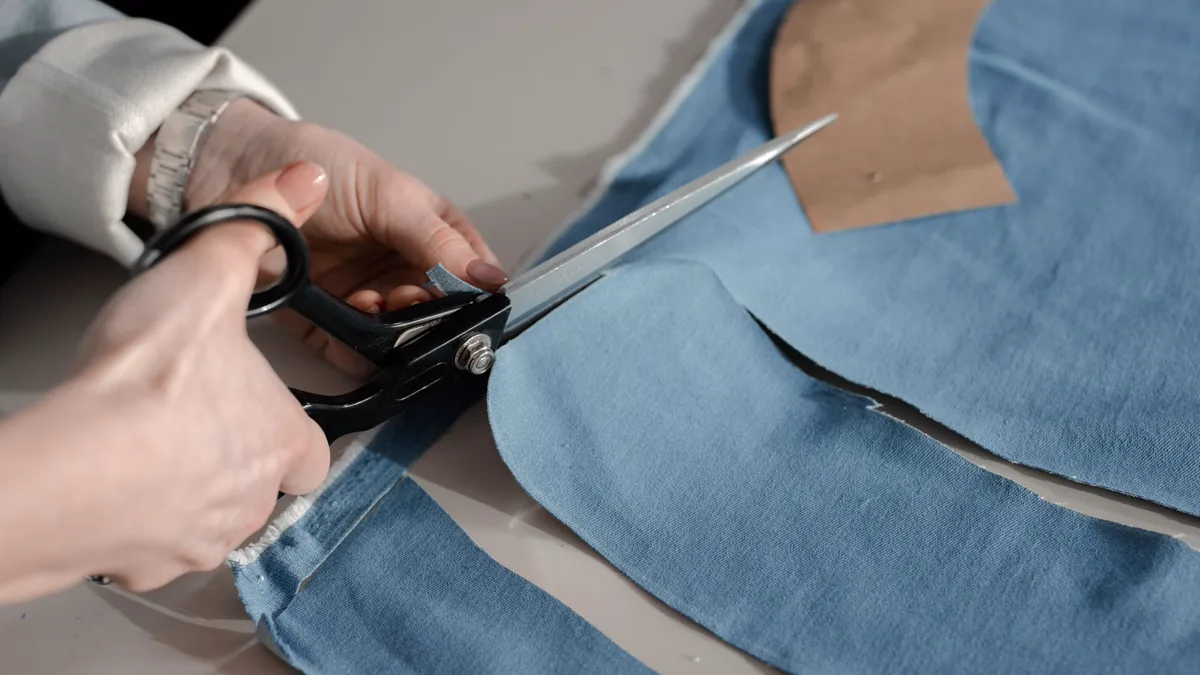
| Piece | Thrift it | Buy it | Build it |
|---|---|---|---|
| Base clothes (shirt, pants, skirt) | Yes, check uniform and formalwear racks | If the cut is unusual | Alter what you find, don’t draft from zero |
| Outer layer (coat, jacket, vest) | Often | If it defines the outline and you can’t find it | Only with a pattern you trust |
| Hair or wig | No | Usually, and early, because it ships slowly | Rarely on a first build |
| Shoes | Yes, or wear your own | Only when the color is the whole point | Fabric shoe covers over shoes you can walk in |
| Accessories (belt, badge, bag) | Sometimes | Small plastic parts | The ideal first handmade piece |
| Prop | No | Only toy-like, clearly fake ones | Light foam or cardboard, after reading the event’s prop policy |
For the thrift run, Goodwill of Dallas says the winning pieces are almost never in the Halloween section. It points shoppers to formalwear, uniforms, bedding and housewares, and suggests holding oversized pieces to your shoulders to judge the shape, not the tag. Most no-sew fixes for cosplay for beginners need little else: a felt roll is $1.25 and a 100-pack of safety pins is $1.50 at Dollar Tree.
Buying doesn’t disqualify you. In a Reddit thread from a group planning its first convention cosplay, a reply from someone who has bought or commissioned costumes for 15 years told them to ignore anyone who says a costume must be made from scratch to be real. Other replies called closet cosplay easier to walk around in, which matters more than accuracy at hour six. That’s the quiet truth of cosplay for beginners: comfort finishes costumes.
How do you start cosplaying in 4 weeks?
Give each week one job: choose and order in week one, thrift and alter in week two, build your one handmade piece in week three, and test-wear in week four. That timeline suits cosplay for beginners built mostly from thrifted or bought pieces. A costume drafted and sewn from scratch needs far longer.
An older beginner guide on the Saber Forum gives three to four months as a rule of thumb for making a costume. Cosplay for beginners stays on a four-week clock only because most pieces are found, not made.
- Week 1, choose and order. Pick one character and save front and back reference images. Set the budget, then order anything that ships: wig, shoes, specialty fabric. Wix buys her wig first because delivery can take a while.
- Week 2, thrift and alter. One focused thrift run with your list and caps. Hem, dye, pin or paint the base pieces until the outfit is wearable.
- Week 3, build one piece. A belt, collar, badge or soft prop: one new skill, not three. Done when it survives five rounds of on and off.
- Week 4, test and pack. Test-wear, fix, then pack a repair kit: safety pins, fabric tape, needle and thread, bobby pins.
Behind schedule in week three? Cut detail, not comfort; it’s the oldest rule in cosplay for beginners. A missing badge won’t stop anyone recognizing you, but shoes you can’t walk in will end your day early.
Which easy cosplay ideas work for a first build?
The easiest cosplay ideas for beginners are characters who already wear real-world clothes, like uniforms, suits, casual jackets or work outfits, plus one signature item. For cosplay for beginners, leave full armor, giant props and anything you can’t sit down in for a later build.
- Everyday-clothes characters: a jacket, a color combo, one accessory. A jacket and T-shirt alone may not read, so pick characters with a third detail like hair, a badge or a bag.
- Uniform characters: school, sports, service or office uniforms thrift well, and the patch or trim becomes your build piece.
- One-signature-item characters: the outfit is plain, and a hat, scarf, pair of glasses or bag does the work.
- Original characters: no accuracy pressure, which makes them a quiet favorite in cosplay for beginners. You design around what you own.
- Group looks: each friend gets one strong detail, and the set reads together.
Skip for now: wings wider than a doorway, untested platform heels, full-face masks you can’t see out of, and any prop that looks like a real weapon.
What skills should you learn after your first cosplay?
Add one new skill per costume. Your second build can stretch toward foam, your third toward wigs or makeup, and each stretch stays manageable because the rest of the costume is familiar. Here is the usual cosplay for beginners ladder, with what each rung teaches.
- Closet cosplay. A character built entirely from clothes you own or can borrow. It trains your eye for outlines, and it costs nothing.
- EVA foam. The usual beginner armor material: cut, heat-shape, seal, paint. Start with one bracer or a collar, never a full suit.
- Cardboard armor. Cheaper than foam and fine for stiff, flat shapes. It fails at corners and seams, so plan the joins before you cut.
- Wigs. A wig changes a look more than any single piece. Learn to fit, trim and style one before buying a second.
- Cosplay makeup. Shape and color carry a face across a room. Start with skin-safe basics like the ones in our easy Halloween makeup looks by skill level.
- Capes and cloaks. Fabric and a neck closure teach drape and weight, and they hide shortcuts underneath.
- Comic con prep. Bigger events mean longer lines, more walking and a prop check at the door. Plan for hours, not one photo.
- Anime looks. Bright hair, sharp color blocks and exaggerated proportions. They reward the wig and makeup steps above.
How do you test-wear a cosplay before the event?
Wear the full costume for at least an hour at home, with shoes, hair and makeup, and do the things a convention will make you do: sit, climb stairs, use a bathroom, carry a bag, walk through a doorway. In cosplay for beginners, this hour catches more problems than any tutorial, so fix whatever pinches, slips or blocks your view now.
- Sit: a low chair, then stand up without using your hands.
- Stairs: one flight up and down. Can you see your feet?
- Reach: raise both arms; nothing should pull open.
- Bathroom: use it once in costume.
- Doorways: walk through one with your bag and any prop.
- Sightlines: turn your head both ways with the wig or hat on.
- New makeup: the FDA’s novelty makeup guidance suggests a dab on your arm for a couple of days to check for a reaction before it goes on your face.
Taian Zhou, who wore costumes to plenty of events before writing a first-convention guide on Substack, puts it plainly: a costume that looks fine on paper meets physics and friction the moment you move. Zhou’s test run checks props through doors, helmets bumping things, straps digging in and chafing, and recommends doing mirror-heavy prep before you reach the venue, since the bathrooms fill with cosplayers fixing their faces.
What should you know before cosplay con day?
Read the event’s posted prop policy before you build or pack any prop, plan for long hours on your feet, and bring water, flat shoes and a small repair kit. Do makeup and wig work at home, because venue mirrors are crowded, and ask before you photograph anyone.

- Props: rules differ, so check the event’s posted prop policy every time. As one example, L.A. Comic Con’s prop and weapon policy bans realistic and replica firearms of any kind and metal or wood swords, allows swords made of light foam, plastic or cardboard, and screens and tags approved props before you reach the floor. Our own rule for every build on this site is simpler: no prop that could be mistaken for a real weapon.
- Heat and lines: in that convention thread, one reply suggested short sleeves and shorts for outdoor lines.
- A helper: Zhou also suggests a friend out of costume to hold your bag and prop and open doors.
- Breaks: simple food that won’t smear makeup, water on a schedule, and a seat before you need one.
- Etiquette: cosplay for beginners starts with manners: ask before photos, keep your hands to yourself, and step out of walkways to pose.
By the numbers
- $2 to $15 buys a single thrift piece at Goodwill of Dallas, the cheapest way to fill a base outfit in cosplay for beginners.
- About $25 buys a complete head-to-toe thrift look there, against $40 to $70 for a new packaged costume this year.
- $2.75 covers a Dollar Tree felt roll ($1.25) plus 100 safety pins ($1.50), enough for most no-sew alterations on a first build.
- 4 weeks for a mostly thrifted first build, against the 3 to 4 month rule of thumb in the Saber Forum guide for making a costume.
- 1983 is the year the Japanese term cosplay was coined, according to Wikipedia.
Remy’s verdict on cosplay for beginners
Start smaller than you want to. Cosplay for beginners rewards the person who finishes a readable, comfortable costume over the one who half-builds something huge. Pick by the grid, spend by the caps, make one piece, and test-wear it like you mean it. The second costume gets easier because the first taught you something, not because it was perfect.
The weak spot is the prop. It’s the part beginners want most and the part most likely to be turned away at the door, so build it last, keep it light and obviously fake, and read the posted policy before it goes in the bag. Ready for more cosplay tips and first builds? Browse the beginner cosplay section.
Stuck mid-build?
Quick answers for the moment the thrift bags are on the floor, the calendar says week three, and a small doubt about your first cosplay creeps in.
Do you need a sewing machine to start cosplaying?
No. In cosplay for beginners, a first build can be thrifted, pinned, fabric-glued or hand-stitched in a few spots. A machine speeds things up later, once you start drafting whole garments.
Is a store-bought costume still real cosplay?
Yes. Buying, thrifting, commissioning and making are all normal routes, and many long-time cosplayers mix them. Portraying the character is what makes it cosplay, not who sewed it.
Do you have to look like the character to cosplay them?
No. In cosplay for beginners, resemblance can save money, for example by letting you skip a wig, but anyone can cosplay anyone. Pick the character you’ll enjoy wearing for a whole day.
Can you cosplay without a wig?
Yes, if your own hair is close enough or the character’s hair hides under a hat or hood. Hair is often a signature detail, though, so run the outline test before you skip it.
Is it okay to go to your first convention alone in cosplay?
Yes, plenty of people do. Keep the costume easy to sit in, carry water, a phone charger and a small repair kit, and plan breaks. For cosplay for beginners, a friend out of costume helps but isn’t required.
How we researched this: Order of steps and price anchors: thrift prices from the Goodwill of Dallas page and craft prices from Dollar Tree listings checked October 1, 2026, prop rules from L.A. Comic Con’s posted policy, and the makeup test wording from the FDA. The first pass came from an AI tool and was rewritten step by step.
Sources: Goodwill of Dallas Halloween Headquarters, Dollar Tree product pages for felt rolls and safety pins, L.A. Comic Con prop and weapon policy, FDA guidance on novelty makeup, Wikipedia: Cosplay, the Saber Forum beginner guide, plus first-hand write-ups from Alice in Cosplayland, Emilee Wix, Taian Zhou and two Reddit threads (r/cosplayers, r/dragoncon).