

Costume in a sentence: How to make a cape comes down to one choice. Skip sewing by cutting a half circle of fleece or felt, which do not fray, and gluing or weaving on a ribbon. Or cut the same circle from satin and hem every edge. For kids, close it with breakaway hook-and-loop, never a tie at the neck.
Learning how to make a cape takes one evening and, for a hip-length adult cape, about a yard of fabric. Below: a no-sew cape and a sewn circle cape side by side, a yardage table by height, closures that let go when pulled, and fabric prices read today.

No-sew vs sewn cape at a glance
Whichever method you pick, how to make a cape starts from one shape: a half or full circle of fabric with a small circle cut out for the neck. What changes is the edge. Fleece and felt are cut and done; woven satin needs a hem or it unravels.
| Method | Best fabric | Edges | Joins | Good for |
|---|---|---|---|---|
| No-sew cape | Fleece, felt, knit | Left raw; they do not fray | Hot glue, a fabric glue whose label names your fabric, woven ribbon | Kids, last-minute costumes, a first build |
| Sewn cape | Poly satin, cotton, wool blends | Double-fold or rolled hem | Machine or hand stitches | Cosplay, renfaire, capes you wash often |
Short on time? Go no-sew tonight; sew one next year from the same cape pattern.
How much fabric do you need for a cape?
Measure from the base of the neck to where the cape should end, then add the neck radius and a 1 inch hem. That sum is the radius of your circle. A half circle needs a piece twice that wide, a full circle needs a square, and a hip-length adult half circle fits in one yard of 58 inch fleece.
The math behind how to make a cape is two divisions and one sum:
- Neck radius, half circle: neck measurement divided by 3.14. A 15 inch neck gives about 4.8 inches.
- Neck radius, full circle: neck measurement divided by 6.28. The same neck gives about 2.4 inches.
- Hem radius: neck radius plus cape length plus 1 inch for the hem.
- Fit check: if twice the hem radius is wider than your fabric, the half circle runs along the bolt instead of across it, and a full circle splits into two halves joined at center back.
No tape measure handy? Proportions published by Drillis and Contini in 1966 put shoulder height at about 0.818 of total height, the hip at 0.530 and the knee at 0.285, as reproduced in SwordSTEM’s comparison table. The table turns those ratios into yardage for how to make a cape at four heights, using a 12 inch neck for kids, 15 inches for adults and 58 inch fabric. A university ergonomics lab’s notes on proportionality constants point out that such ratios are rough averages, so measure the real person before you cut.
| Wearer height | Hip-length cape | Half circle | Full circle | Knee-length cape | Half circle | Full circle |
|---|---|---|---|---|---|---|
| 3 ft 6 in | 12 in | 1/2 yd | 1 yd | 22 in | 1 yd | 1 1/2 yd |
| 4 ft 6 in | 16 in | 3/4 yd | 1 1/4 yd | 29 in | 2 yd (1 yd on 72 in felt) | 3 3/4 yd |
| 5 ft 4 in | 18 in | 3/4 yd | 1 1/4 yd | 34 in | 2 1/4 yd | 4 1/4 yd |
| 6 ft | 21 in | 3/4 yd | 1 1/2 yd | 38 in | 2 1/2 yd | 4 3/4 yd |
Amounts round up to the next quarter yard; Hobby Lobby sells online in full-yard cuts, and prewashing needs a little extra. Note the jump at knee length: once the circle outgrows the fabric width, yardage roughly doubles, which is why most first capes stop at the hip.
Hooded designs change how to make a cape and how much cloth it takes: OLFA’s no-pattern cape tutorial, a gathered rectangle with a hood, calls for about 1.75 yards for a child and 2.25 for an adult.
How to make a cape without sewing
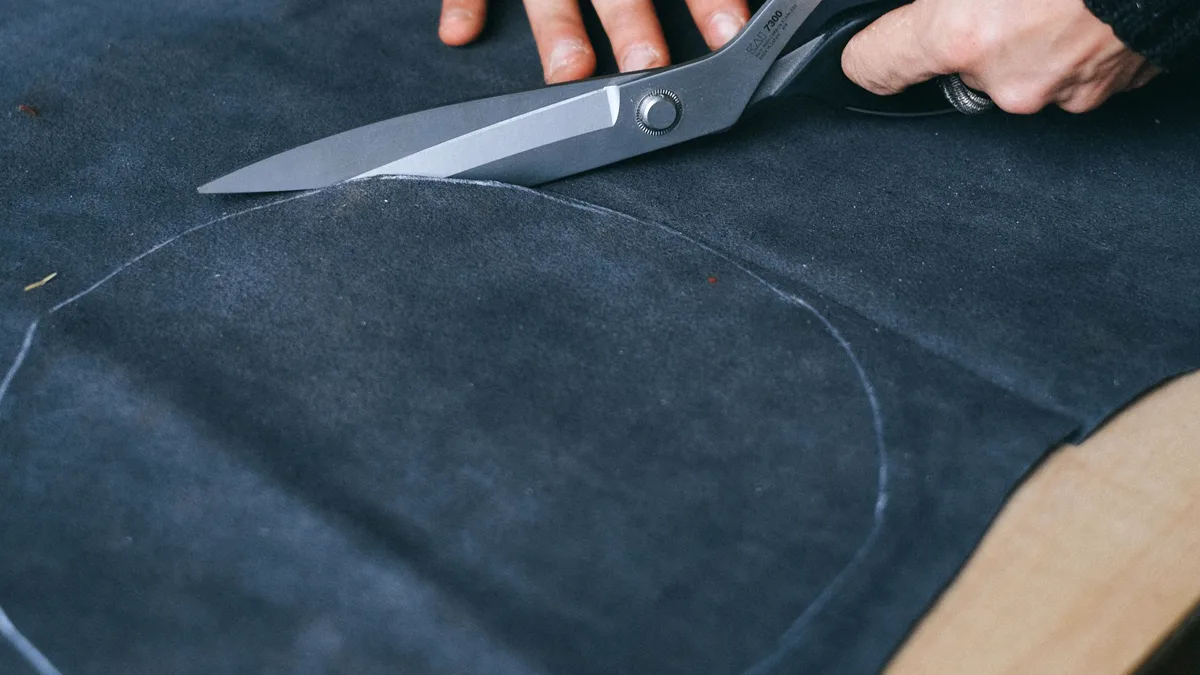
To learn how to make a cape without sewing, choose fleece or felt, fold it so the fold becomes the center back, draw the neck and hem curves with string and chalk, then cut. Add the closure with hot glue or a fabric glue whose label names your fabric, or weave ribbon through small slits along the top.
- Fold. Fold the fabric in half with the fold running from the neck down to the hem. The fold is the center back, so it never needs a seam.
- Draw. Tie chalk to a string, hold the other end at the folded top corner and swing an arc at the neck radius, then a second arc at the hem radius. That string compass is the cape pattern.
- Cut. Cut both layers along the arcs and leave the edges raw.
- Close. Glue ribbon tabs to the neck corners for an adult, or hook-and-loop pads for a child (see closures below).
- Cure. Let the glue set before anyone wears it. Aleene’s Flexible Stretchable Fabric Glue, for example, lists 24 hours to dry.
Read the glue label before you buy. Take Aleene’s Fabric Fusion: its Hobby Lobby listing says it is not recommended for fleece or felt, the two fabrics most no-sew capes use. Aleene’s Super Fabric Adhesive lists felt and satin among its fabrics, at $7.49 for 2 ounces. With fleece, use hot glue or the slit-and-weave trick.
Makers who publish how to make a cape tutorials keep the no-sew ones short. Andrea’s Notebook’s no-sew cape folds the top edge of a knit fabric over an inch, snips slits an inch apart, weaves a ribbon through and gathers it, about 10 minutes once the supplies are out. She warns that bedsheets fray when cut and that thick fleece makes bulky gathers.
Delia Creates folded a 36 inch felt square into quarters, marked an 18 inch radius, cut away about a third of the circle and hot glued ribbon to the neck. Her cape fits kids of roughly 2 to 6 and slips over a jacket. The Doodlecraft blog maker sewed only a neck casing, left the edges raw on fabric that does not fray and wore the cape out the same day; she notes the casing can be glued instead.
How do you sew a half or full circle cape?
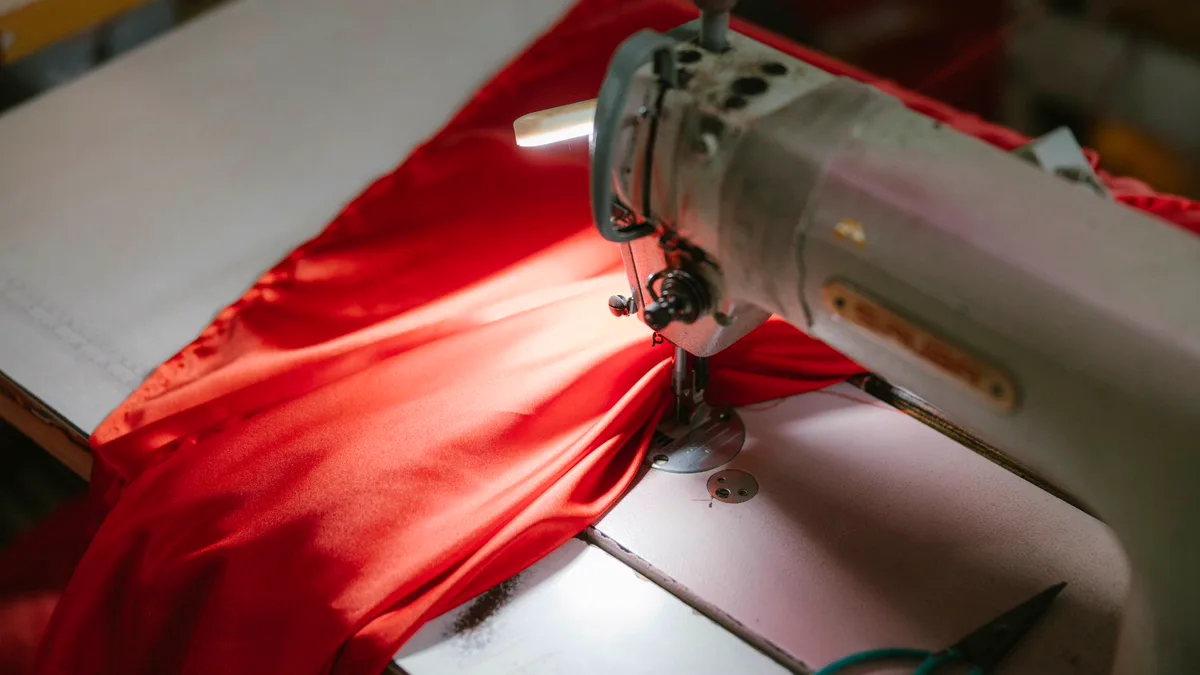
If you sew, how to make a cape is mostly hemming. Cut the same circle from a woven fabric, stay-stitch the neck curve so it cannot stretch, then hem every raw edge with a narrow double fold or a rolled hem. A half circle makes a classic DIY cape; a full circle to the ankle becomes a cloak for cosplay or a renfaire.
- Prewash and press. Woven cotton can shrink in its first wash.
- Lay it on grain. Keep the center back line parallel to the selvage, the finished edge along the bolt. Cut off grain and the cape twists as it hangs.
- Trace and cut. Use the same string compass. The 1 inch hem allowance is already in the yardage table.
- Stay-stitch the neck. Stitch just inside the neck curve first, because curved edges stretch as you handle them.
- Hem. On straight front edges, fold 1/2 inch, press, fold 1/2 inch again and stitch. On the curved hem keep the fold narrow, about 1/4 inch twice, or use a rolled hem foot; a wide fold on a curve puckers.
- Finish the neck. Bind it in bias tape or a facing, then add the closure.
First-timers say cutting, not sewing, is the hard part of how to make a cape. A Reddit beginner, partway through a first cloak sewn with experienced help, wrote a step-by-step cloak tutorial that calls laying pieces on the straight of the fabric the step where you will make a mistake. Their pattern called for 2.6 meters; they bought 3 to lengthen it and it was just enough. A reply pointed out that a cape can be sewn by hand, just slowly.
OLFA’s cape designer, whose four kids seem to need a cape every Halloween, hems with a 1/2 inch double fold and gathers the top with two rows of gathering stitches before binding it in bias tape that doubles as ties. For a child, swap the ties for a closure below.
Do you need to line a cape?
No. Lining is the optional chapter of how to make a cape. It hides the wrong side when the cape swings, adds weight so it hangs better and replaces hems, because the edges finish inside. It also doubles the fabric bill, so skip it on fleece and felt and consider it on satin.
Cut the circle from both fabrics, stitch them right sides together with a 1/2 inch seam, leave a 3 inch gap, turn and press. A Beautiful Mess lined a child’s cape the same way, using 1 1/2 yards each of outer and inner fabric.
Which closure should a cape use?
The closure is the part of how to make a cape that matters most for kids. For adults, any closure works: ribbon ties, a button and loop, or a magnetic snap. For children, use hook-and-loop sewn so it peels open with a firm tug, or attach the cape to the shoulders of a shirt so nothing circles the neck at all.
| Closure | How it attaches | Lets go when pulled? | Use for |
|---|---|---|---|
| Ribbon or cord ties | Glued, woven or stitched at the neck corners | No, a knot holds | Adults only |
| Button and loop | Stitched button with an elastic or cord loop | Sometimes, depends on the loop | Teens and adults |
| Magnetic snap | Sewn in or clamped through the fabric | Yes, but loose magnets are a swallowing risk | Adults; not small kids |
| Hook-and-loop at the neck | Pads sewn or glued to the neck corners | Yes, when sewn so a pull peels it | Kids, after a pull test |
| Shoulder attach | Hook-and-loop pads or pins on a shirt’s shoulders | Yes | Preschoolers and up |
Sew-on hook-and-loop tape costs $2.29 for 36 inches at Hobby Lobby, the cheapest line in how to make a cape safely.
Parents in an Ask MetaFilter thread on safe kid capes mostly settled on hook-and-loop at the shoulders of a shirt, firm for play yet off with an easy yank. One added a trick: sew the cape to the far edge of the hook-and-loop strip, so a pull peels the halves apart. Magnets were turned down for small children: the CPSC warns that two or more swallowed magnets can attract each other inside the body and cause holes in the stomach and intestines, according to its 2012 magnet warning.
How do you keep a cape safe for kids?
For anyone working out how to make a cape for a child, nothing should tie around the neck, and the hem should stop well above the shoes. Use a closure that releases, pull-test it before every outing, and pick polyester or nylon, the fabrics the CPSC points to for flame resistance.
Even breakaway closures can fail. In April 2016 the CPSC announced a recall of about 11,000 children’s bat capes sold by IKEA because the hook-and-loop fastener at the neck could fail to detach readily, a strangulation hazard. So test yours, every time:
- Pull test: hold the cape at the hem and tug back and to the side. It should come away before the child’s head moves.
- Length: costumes should not drag on the ground, per the CPSC’s 2013 costume safety tips.
- Entanglement: the CPSC’s 2008 costume safety release advises avoiding long-draped items that could cause an entanglement hazard, so keep floor-length capes off playgrounds and slides.
- Flame: for homemade costumes, the CPSC suggests inherently flame-resistant synthetics such as nylon and polyester. The fleece, felt and poly satin in this guide are all listed as 100% polyester.
- Tools: hot glue and shears stay with the adult.
No-sew vs sewn: which cape should you make?
Make the no-sew cape when the costume is due this week, the wearer is a child or there is no sewing machine in the house. Sew it when the cape will be washed often, worn for years or must flow like a cloak. Both answers to how to make a cape share one pattern, so a no-sew test cape doubles as your fitting.
Prices for both ways of how to make a cape are listed prices read on Hobby Lobby product pages on October 1, 2026; sales and your local store may differ.
| Factor | No-sew cape | Sewn cape |
|---|---|---|
| Fabric | Anti-pill fleece $9.99/yd (58 to 60 in wide) or felt $7.99/yd (72 in) | Poly satin $6.99/yd (58 in), plus thread |
| Adult hip-length half circle, fabric plus hook-and-loop | $12.28 in fleece (1 yd plus $2.29 tape) | $9.28 in satin, plus thread |
| Tools | Shears, chalk, string, hot glue gun | The same, plus a machine or needle, pins and an iron |
| Time | Minutes: Delia Creates bills her felt cape as five minutes, Andrea’s Notebook about 10 | Longer, since every curved edge needs a hem |
| Look | Felt holds a crisp shape; fleece hangs heavy and warm | Satin flows and catches light |
| Washing | Fleece listing: machine wash cold, tumble dry low | Hems keep woven edges from unraveling in the wash |
| Weak spot | Glued tabs can peel | Puckered hems on tight curves |
Wikipedia’s polar fleece entry describes fleece as polyester and hydrophobic, though not waterproof, and warns that high-heat drying and ironing can damage it, so keep the iron off. Wearing a cape over armor? Our cardboard armor build covers the pieces underneath, and a cape over clothes you own is a quick win in our closet cosplay guide.
By the numbers
- 3.14 is what you divide your neck measurement by for a half circle neck radius; use 6.28 for a full circle.
- $9.99 a yard is the listed price of 58 to 60 inch anti-pill fleece at Hobby Lobby on October 1, 2026.
- About 11,000 children’s bat capes were recalled in 2016 over a neck fastener that could fail to release, per the CPSC.
- 0.818 is shoulder height as a share of total height in the Drillis and Contini proportions, the starting point for cape length.
Remy’s verdict on how to make a cape
Start without sewing. The cheapest way to learn how to make a cape is a felt or fleece half circle, which teaches the whole job: the circle math, the cape pattern and the closure, for about the price of a lunch. Then try it in satin. A cape is a forgiving first cosplay piece, because the silhouette reads from across the room long before anyone sees an edge.
For kids, one rule beats every other tip on how to make a cape: nothing goes around the neck unless it lets go. New to costumes in general? Our four-week cosplay for beginners plan puts capes on its first rung, and the beginner cosplay section has more first builds.
Stuck mid-build?
Quick answers on how to make a cape for when the chalk line is drawn and one detail will not cooperate.
How long does it take to make a cape?
If you are working out how to make a cape the night before, go no-sew: felt or fleece takes minutes once the circle is drawn, plus glue drying time. A sewn half circle takes longer, because every curved edge needs a hem.
What fabric is best for a cape that flows?
Lightweight wovens such as poly satin flow best, so for a flowing cloak, how to make a cape means hemming. Fleece hangs heavier and warmer with raw edges, and felt holds a crisp, graphic shape.
Can I make a cape from a bedsheet or blanket?
Yes. A cut bedsheet frays, so how to make a cape from one depends on hems, or on keeping its finished edges at the sides and hem. A fleece blanket cuts cleanly and suits the no-sew method.
How do I add a hood to a cape?
Learning how to make a cape with a hood adds one piece: a folded rectangle sewn into a hood and joined at the neck. OLFA’s tutorial uses 22 by 34 inches for adults and 18 by 28 for children.
How do I wash a fleece or felt cape?
Follow the bolt label. The anti-pill fleece listing says machine wash cold and tumble dry low. Part of how to make a cape last is patience: let glued closures cure fully before the first wash.
How we researched this: Steps on how to make a cape come from the makers cited below. Safety wording comes from the CPSC, glue advice and prices from Hobby Lobby listings read October 1, 2026. The yardage table was worked out from the Drillis and Contini ratios, not from fitting real people. The first pass came from an AI tool and was rewritten step by step.
Sources: CPSC recall and releases from 2008, 2012 and 2013, Wikipedia: Polar fleece, SwordSTEM, proportionality notes, Hobby Lobby listings for anti-pill fleece, felt, poly satin, tape and glue, and builds from Andrea’s Notebook, Delia Creates, Doodlecraft, OLFA, A Beautiful Mess, Reddit and Ask MetaFilter.